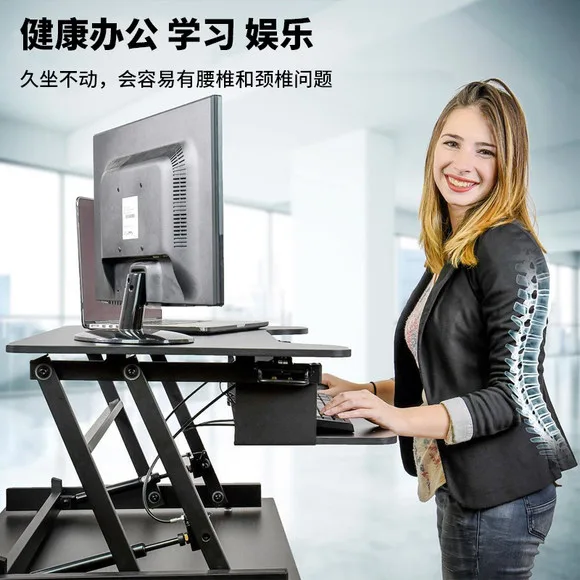
Public sector furniture buying is not the same as buying for a private office. An NHS trust, a council or a university usually sources height-adjustable desks through a framework agreement, a project contractor or a dealer who already holds the framework place. That means the factory behind the desk is rarely chosen directly — it is chosen because a dealer needs a supplier who can survive the questions their public sector buyer will ask. This guide sets out those questions, and what a UK dealer or project contractor should demand from a standing desk factory before quoting a public sector tender.
Most lost public sector bids are not lost on price. They are lost on evidence. A trust's procurement team typically needs to demonstrate that the product meets the specification, that the supplier can deliver to a dated programme, and that the warranty position is documented rather than verbal. When the factory behind the bid cannot answer those three points in writing within a day, the dealer either bids with a risk it cannot price, or walks away.
In practice this comes down to three questions that repeat in almost every public sector enquiry we see: warranty split, lead time against a programme, and minimum order in pallet terms.
A headline figure such as "10 years" or "15 years" is a marketing claim until it is broken into components. A standing desk is a steel frame, two motors, a control box, a handset and a desktop — and the failure profile of each is different. A serious supplier will state the term separately for:
Ask also who performs the warranty in the destination country. A factory warranty that requires shipping a 40 kg frame back to China is not a warranty a UK dealer can offer a trust. The realistic model for most dealers is a parts-based warranty: the factory ships replacement motors, control boxes or handsets, and the dealer's own engineer fits them. Confirm the parts lead time in writing, because a 6-week parts wait is what turns a warranty claim into a complaint.
Public sector delivery is usually tied to a building programme, a term start date or a ward refurbishment window. "About 30 days" is not an answer a project manager can plan against. A supplier should be able to give:
It is also worth asking how the factory handles a mixed order. Public sector projects often need a small number of several SKUs — 40 desks in one size, 12 in another, plus a handful of corner units — rather than one container of a single model. A factory that can only run one SKU per production slot will either refuse the order or quote a lead time that the programme cannot absorb.
MOQ is usually quoted in sets, but the practical constraint is the pallet and the container. A 20–50 set minimum per model is common for OEM standing desk production, and the useful question is whether different models can share a pallet or a container. If they can, a dealer can serve a public sector project with a realistic order instead of over-buying one SKU to hit a container minimum.
Ask for carton dimensions, gross weight per carton and CBM per set. Those numbers let the dealer calculate whether a mixed order still fills a container economically, and they are the numbers a procurement team will ask for when comparing bids.
| Item | What to ask the factory for | Why the buyer wants it |
|---|---|---|
| Height range | Travel in cm, and whether the range suits seated and standing use for the actual user population | DSE assessment and reasonable adjustment requests |
| Load rating | Rated load in kg, tested or declared | Dual-monitor and CPU-holder configurations |
| Noise | Measured dB at the user position | Open-plan and clinical environments |
| Stability | Wobble/rock test description at full height | Complaints and perceived quality |
| Electrics | Voltage options, plug type, power draw | UK 230V supply and PAT testing routines |
| Documentation | Specification sheet, 2D drawing, assembly instructions | Tender submission and site installation |
Two further items are frequently asked and frequently mishandled. The first is finish: public sector buyers often need a specific laminate or a colour that matches existing furniture, which means the factory must work to a colour code rather than offer a stock range. The second is spares: a trust maintaining 200 desks for a decade needs a parts route, not a one-off sale.
A supplier who answers all seven within a day is a supplier a dealer can put in front of a public sector buyer. A supplier who answers three and deflects the rest is a risk that shows up later, usually during installation week.
CHEUKHAM (Foshan Shi Chengyuan Furniture Co., Ltd.) is a standing desk factory in Foshan, China, shipping to more than 50 countries at roughly 5,000 sets per month. We build 3-stage dual-motor frames with 62–128 cm travel, 120 kg rated load, under 45 dB operation and a 4-position memory handset, with desktops of 120 / 140 / 160 × 60–70 cm in MDF or bamboo, produced to customer colour codes.
For dealer and project programmes we work on a 20–50 set minimum per model with mixed models able to share a pallet or container, samples in 7–10 days and first bulk container in 25–35 days after artwork and deposit. Warranty terms are confirmed in writing per component for each programme rather than quoted as a single headline figure, and replacement parts are shipped from stock.
If you are preparing a public sector or NHS bid and need specification sheets, 2D drawings, carton and CBM data, or FOB pricing for a mixed order, send the requirement list to our contact page or write to 23842190@qq.com and we will reply the same working day.
Usually not directly — public sector frameworks are held by UK suppliers, dealers or contractors. The factory's role is to be the documented supply chain behind that bid: specification evidence, dated lead times, component-level warranty and a parts route.
It varies by component and by programme. The practical approach is to agree a term per component in writing, confirm who performs the repair in the destination country, and confirm the parts lead time. A single headline number without a component split is difficult to enforce.
20–50 sets per model is a common OEM minimum, and the key question is whether different models can share a pallet or container. If they can, a project order does not need to be a single SKU.
Samples typically take 7–10 days; a first bulk container typically takes 25–35 days after artwork and deposit are confirmed. Repeat orders are usually faster once colour codes and tooling are fixed.
We are the manufacturer — send us your specs and get a factory-direct answer within 24 hours.
Contact CHEUKHAM →