Standing Desk Certifications for Importers: CE, RoHS, FCC, ISO 9001, GS & UKCA Explained
CHEUKHAM Furniture Team · Shunde, Guangdong · September 2026
Certification is the first filter in a B2B desk purchase, and it is usually applied before price is even discussed. Retailers, marketplaces and tender committees will not list an electric standing desk without documents, and in the EU the importer — not the Chinese factory — is the party legally responsible for the product once it is placed on the market. This guide explains what each mark on a supplier's quotation actually proves, which marks apply in North America and Europe, how to verify a certificate that is put in front of you, and how certification quietly shapes MOQ, lead time and unit price.
1. Why buyers screen certifications before they look at the price
For an importer, certification is a risk-management tool, not a marketing asset. Four pressures make it the first question:
Channel gatekeeping. Amazon, Wayfair, Media Markt and most EU retail groups require compliance documents before a listing goes live. A missing Declaration of Conformity can stop an order that is already in the warehouse.
Legal responsibility sits with the importer. Under EU rules the importer is the "economic operator" responsible for conformity and must be able to produce technical documentation on request. Under the General Product Safety Regulation (EU) 2023/988, applicable since 13 December 2024, that obligation became explicit and is enforced per consignment.
Customs and recall risk. Non-compliant electrical goods are stopped at the border or withdrawn from sale. A recall costs far more than the margin on the container.
Liability and insurance. A motor or control-box failure on a desk that a customer assembled at home is an insurance event. Insurers and retailers both ask for evidence that the product was tested.
Because of this, an experienced buyer shortlists suppliers by documentation first and negotiates price second. If two factories quote the same desk, the one that can produce the report covering the exact model usually wins — even at a higher unit price.
2. Which mark applies where
Certifications are not interchangeable, and a supplier that offers "CE, FCC and RoHS" as a bundle without explaining the scope is usually papering over the details. Here is the practical map for electric height-adjustable desks:
CE marking (EU/EEA). A self-declaration by the manufacturer that the product meets the applicable EU directives. For a mains-powered desk the relevant ones are normally the EMC Directive 2014/30/EU (electromagnetic emissions and immunity), the Low Voltage Directive 2014/35/EU (electrical safety, since the control box runs at mains voltage), and — depending on how the product is classified — the Machinery Directive 2006/42/EC. If the handset or control unit uses Bluetooth or another radio link, the Radio Equipment Directive 2014/53/EU also applies. "CE" is meaningless on its own; it is only as strong as the test reports and the Declaration of Conformity behind it.
UKCA (Great Britain). The UK's post-Brexit equivalent. In practice, GB has continued to recognise CE marking for most goods, so a CE-compliant desk is normally acceptable; some UK retailers and public buyers still request UKCA paperwork, so ask before you assume.
RoHS. Restricts lead, mercury, cadmium, hexavalent chromium, PBB and PBDE — plus four phthalates (DEHP, BBP, DBP, DIBP) — under Directive 2011/65/EU and its amendments. It covers the electrical assembly, wiring and handset. A RoHS report that tests only the original six substances is out of date.
FCC (United States). An electromagnetic compatibility requirement, not an electrical safety mark. Motor-driven furniture is typically treated as an unintentional radiator under FCC Part 15 Subpart B, evidenced by a test report and a Supplier's Declaration of Conformity. Radio modules (for example Bluetooth handsets) are a separate and stricter case.
UL / ETL (United States and Canada). This is the actual safety listing, usually obtained by using UL-recognised or listed components (control box, power supply) rather than certifying the whole desk. Retailers increasingly ask for the component listing rather than a desk-level certificate.
ISO 9001. A certification of the factory's quality management system — not of the product. It tells you the plant follows documented processes, traceability and corrective action. It does not prove that any particular desk is compliant, and it must never be presented as a product certificate.
GS (Germany).Geprüfte Sicherheit is a voluntary mark issued by a ZLS-accredited body such as TÜV or Intertek. It is a higher bar than CE: the product is tested by a third party and the factory is inspected, usually annually. German-speaking retail buyers like it because it moves the testing responsibility away from the supplier's self-declaration.
Chemical and material rules. For the EU, REACH (SVHC declarations), the General Product Safety Regulation for market access, and packaging EPR registrations. For the US, CARB / TSCA Title VI formaldehyde limits for composite wood tops and California Proposition 65 labelling for finishes.
Performance standards. Not legal marks, but they decide tenders: EN 527 (office work tables), EN 1730 and EN 12521 (strength, durability and stability of tables and domestic furniture) in Europe, and ANSI/BIFMA X5.5 in North America. Always quote the standard the buyer actually cites in the specification.
3. How to verify that a certificate really covers your order
Certificates are easy to copy and often out of date. Run these checks before you release a deposit:
Look at the issuing laboratory, not the logo. Legitimate reports come from internationally accredited bodies — SGS, TÜV, Intertek, Bureau Veritas, DEKRA or a CNAS-accredited lab under the ILAC mutual recognition arrangement.
Verify the certificate number directly. TÜV, SGS, Intertek and BV all publish online certificate databases. GS bodies are listed by ZLS, and UL listings can be checked in UL Product iQ. FCC equipment authorisation can be checked through the FCC database for equipment that requires an ID.
Ask for the full test report, not the certificate image. A certificate says a decision was made; the report shows what was tested, to which standard, on which sample, and with which photographs and component list.
Confirm the model matches what you are buying. Check the model name, the frame, the control box, the handset and the internal photographs against the sample. Reports issued for a different control box are a common audit failure.
Check who holds the certificate. If the holder is a trading company or a different factory, you cannot rely on it. For CE, read the Declaration of Conformity: it must identify the manufacturer, the product, the directives applied and the harmonised standards used, and it must give an EU contact where required.
Check the standard version and date. Standards are revised; a report against a superseded edition is weak evidence even if the certificate is still "valid".
Check the scope. RoHS must cover all ten restricted substances. FCC is EMC, not safety. And if the desk ships with a wireless handset, ask specifically for RED coverage rather than generic CE.
Get the original PDF from the factory, not a screenshot. WhatsApp photos are not evidence; a PDF from the factory's own email domain, with the report reference visible, is.
4. How certification affects your quote, MOQ and lead time
Certification rarely appears as a line item on a quotation, but it is priced in. Three rules of thumb:
Testing is charged per model or per series, and someone pays for it. A factory that already tests and sells standard certified models absorbs that cost across volume, which is one reason a certified model may not cost more than an uncertified one from a smaller workshop. When you ask for a new configuration — a different control box, a wireless handset, a new top material — you trigger a re-test, and that cost and time are legitimately chargeable.
Certification is not transferable. A test report belongs to the applicant and the model it names. A trading company that shows you a factory's certificate cannot necessarily give you the document or support a claim with it, and a certificate for the factory's own brand does not automatically cover your private-label version.
MOQ effects are indirect. A standard certified SKU can usually ship at a low trial quantity, because the tooling and the test regime already exist. Custom certification, private-label control boxes or a GS-specific build push the minimum order quantity up and add lead time — typically several weeks for laboratory scheduling plus the production run.
Practical consequence when you compare quotes: normalise the offers before you compare numbers. Ask each supplier for the same document pack, for the same model, and ask who holds the report. A slightly higher quotation backed by documents you can actually use is usually cheaper than a lower one you cannot sell through your channel.
5. What we can provide
Zhuhan Furniture Co., Ltd. (CHEUKHAM) manufactures height-adjustable desks and mobile desks in Shunde, Guangdong, and sells direct from our own production. For export buyers we prepare a document pack with each quotation:
Company documents — business licence, ISO 9001 certificate, factory profile and production capacity.
EU conformity — CE Declaration of Conformity and the EMC / LVD test reports behind it, plus UKCA support where a UK buyer requires it.
RoHS test reports covering the full ten restricted substances.
US documentation — FCC Part 15 Subpart B test report and Supplier's Declaration of Conformity, and component-level listings for the control box and power supply.
Furniture performance reports — strength, durability and stability testing against the standard your specification cites (EN 527, EN 1730, EN 12521 or BIFMA X5.5), quoted per project.
Material and chemical statements — formaldehyde (CARB / TSCA Title VI) and Proposition 65 statements for composite tops and finishes.
Commercial pack — specification sheet, carton dimensions and CBM per unit, MOQ tiers, warranty statement and spare-parts terms.
Export paperwork and inspection — commercial invoice, packing list, certificates of origin and FTA certificates, with third-party pre-shipment inspection (SGS, BV) arranged on request.
Brand authorisation — a letter of authorisation covering your private label or OEM specification.
If a buyer asks for a document we do not hold for a particular model, we say so and quote the test — we do not send a certificate for a different product.
6. Common pitfalls importers hit
The certificate without the report. A one-page PDF with a logo and a number proves very little. Ask for the report and verify the number.
Borrowed documents. Certificates held by a related factory, a former partner or a competitor's brand are not yours to use, and enforcement is increasingly checked at the model level.
Model mismatch. The report names the frame the factory usually builds, but your order uses a different control box, USB module or handset.
Treating FCC as a safety mark. FCC covers electromagnetic compatibility. Electrical safety in the US is a UL / ETL question.
Treating ISO 9001 as a product certificate. It is a factory quality system; it will not satisfy a retailer's compliance team.
Assuming UKCA is mandatory. For most goods, GB continues to accept CE. Confirm what your buyer wants rather than buying a second certification you may not need.
Out-of-scope RoHS. Reports testing only the original six substances, or that ignore the cable and handset.
Superseded standards. A report against an old edition of EN 527 is weak evidence in a tender that cites the current version.
Wireless handsets treated as ordinary electronics. A Bluetooth handset can pull the whole product under the Radio Equipment Directive, which is a different and stricter test route.
Promises instead of documents. "We will send the certificate after the deposit" is the most expensive sentence in sourcing. Get the pack with the sample, before payment.
7. A certification checklist you can paste into your RFQ
Copy this into your enquiry so suppliers answer on the record:
Confirm the destination market (EU, UK, US, other) and the applicable standards for our category.
Send the CE Declaration of Conformity and the underlying EMC and LVD test reports for the exact model quoted.
Send the RoHS test report covering all ten restricted substances, including the handset and cable.
For US orders, send the FCC Part 15 Subpart B report and SDoC, and the UL/ETL listing for the control box and power supply.
State the report number, issuing laboratory, issue date and the model named in each document.
State whether the certificate holder is the manufacturer or a third party.
Send furniture performance test reports (EN 527 / EN 1730 / EN 12521 / BIFMA X5.5) as applicable to our specification.
Confirm which documents carry an additional testing cost and lead time for a new configuration.
List the documents included free of charge with a standard order.
Confirm lead time for a first order including any new testing.
8. Next step
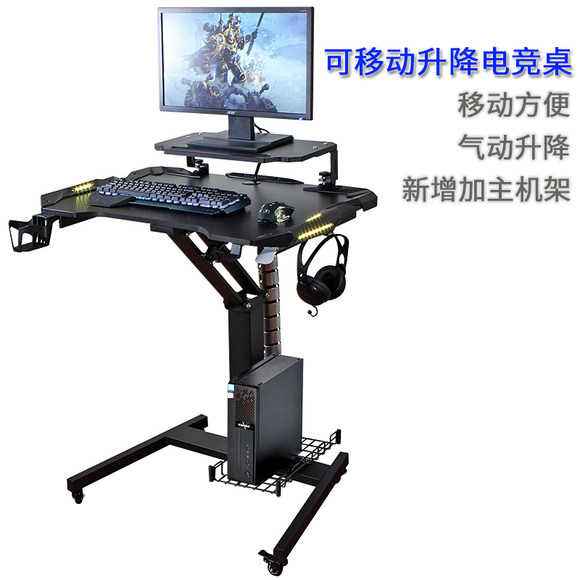
The manufacturers that answer those ten points with documents, rather than adjectives, are usually the ones that also deliver a container on schedule. Our adjustable desk range covers dual-motor electric standing desks, mobile height-adjustable desks on lockable castors, gaming desks and sit-stand workstations — all built in our own plant and shipped with the document pack above on request.